
Next case

Client
Retail México
Estimated duration
We reduced feature development time by 92%
We reduced the average time to deliver value from 365 to 21 days.
From 8% to 74% backlog compliance.
They demonstrated an increase in agility adoption maturity within the cells.
The client approached bettter requesting assistance to carry out, definitively, the adoption of agile methodologies in their technology team. Their more than thirty teams and five hundred people had not achieved a satisfactory adoption in the nearly three years that the initiative had been under development.
The organization's frustration was notable: the management team was evaluating whether to make one last attempt or give up definitively.
The technology teams were barely able to complete 8% of the backlog defined in the planning, and their time-to-market extended to nearly a year. The cells needed more than 360 days to close the deliveries they had started.
Additionally, not only were deliveries systematically produced behind schedule; their value did not correspond to business expectations.
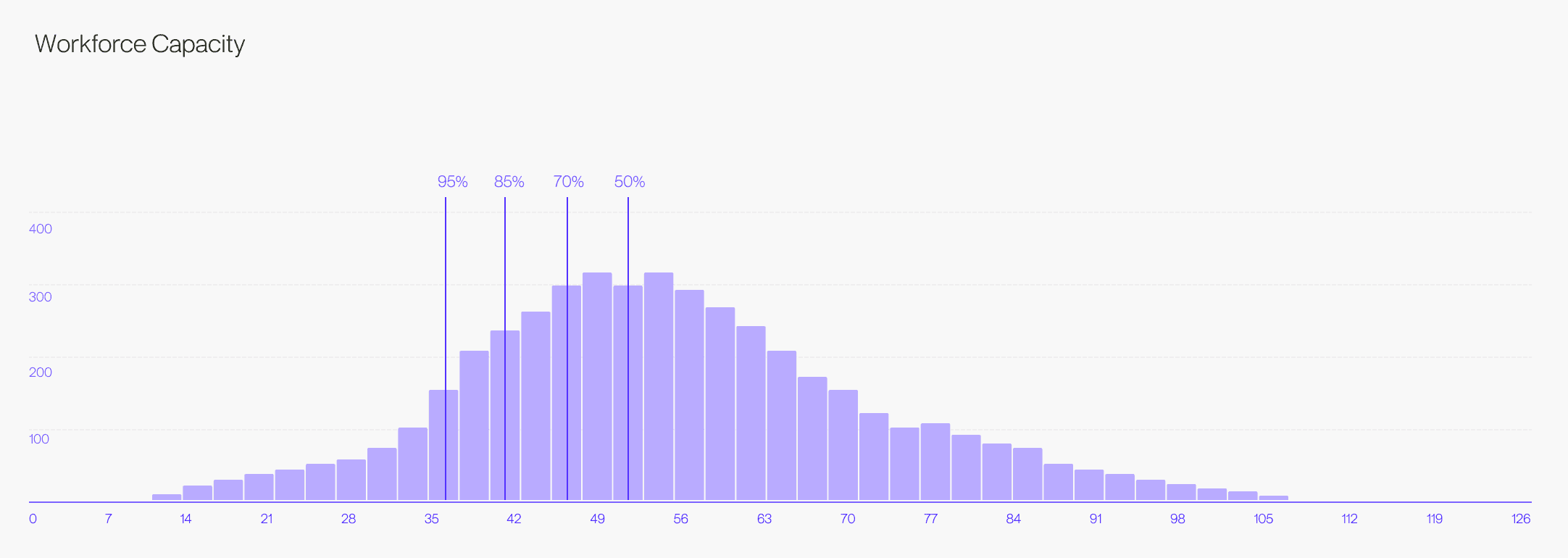
Prediction model for the teams' capacity to implement a number of user stories within the defined strategic period.
Initially, bettter's consultants addressed the client's request. However, after an initial diagnosis, deeper and more systemic issues were detected that generated inefficiencies associated with the lack of adoption of agile methodologies.
The challenge for bettter was then to refocus the problem for the client. It was not about adopting agility; the goal was to find a way to accelerate the delivery flow and improve the value generation of the organization.
To achieve this, the work was divided into two phases. The first, aimed at establishing the agile standard in the organization, taking measurements, and starting to accelerate the flow. The second, focused on orienting the organization toward generating value for the client.
In the first phase, two key initiatives were defined: measuring the agile maturity level of the teams and working on the fundamentals of agility cell by cell. Once the measurements were taken, it was possible to observe measurable progress in each of the organization's teams and individuals. The rest of the phase focused on gradually accelerating each of the cells.
After the first three months of work, bettter succeeded, in cooperation with management, in significantly accelerating the delivery flow. However, it was clear that, despite this acceleration, the value delivered was not yet what was expected by users and the business.
To address the second phase, bettter worked with the organization on a deeper transformation. A strategic planning flow and a new governance model for decision-making were designed. The goal of both was to clarify, for the entire organization, what the business management intended to achieve in each period, and to define the solutions that would allow those results to be achieved.
bettter worked for a year on the implementation of the model in its entirety. The results, however, were remarkable from the first quarter.
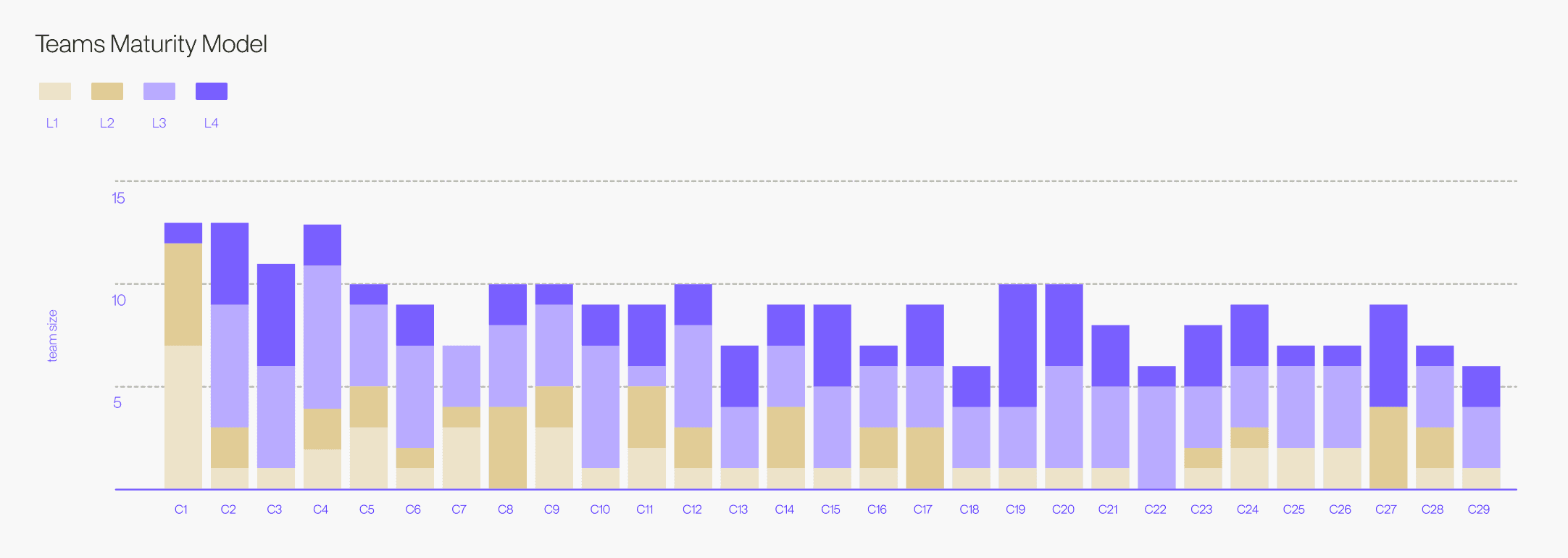
Phase 1 — Delivery Acceleration
We developed a maturity assessment model for adopting agile methodologies, which allowed us to measure each team's progress throughout the process.
We implemented an adoption process for the essential fundamentals of Agile methodology.
We measured the teams' capability to complete deliveries and its relationship with the level of maturity achieved.
We evaluated the challenges assigned to each team and the associated resource distribution.
Phase 2 — Improving Value Delivery
We redefined the workflow and the organizational structure.
We redesigned the governance model for decision-making.
We measured the teams' experience in relation to the type of challenges they faced.
We evaluated the teams' capability to estimate and define the scope of what they were able to build in each cycle.
What they are carrying
From 360 days to 21 days in backlog deliveries.
From 8% to 74% in backlog delivery.
90% of the cells demonstrated an increase in maturity in adopting agile methodologies.