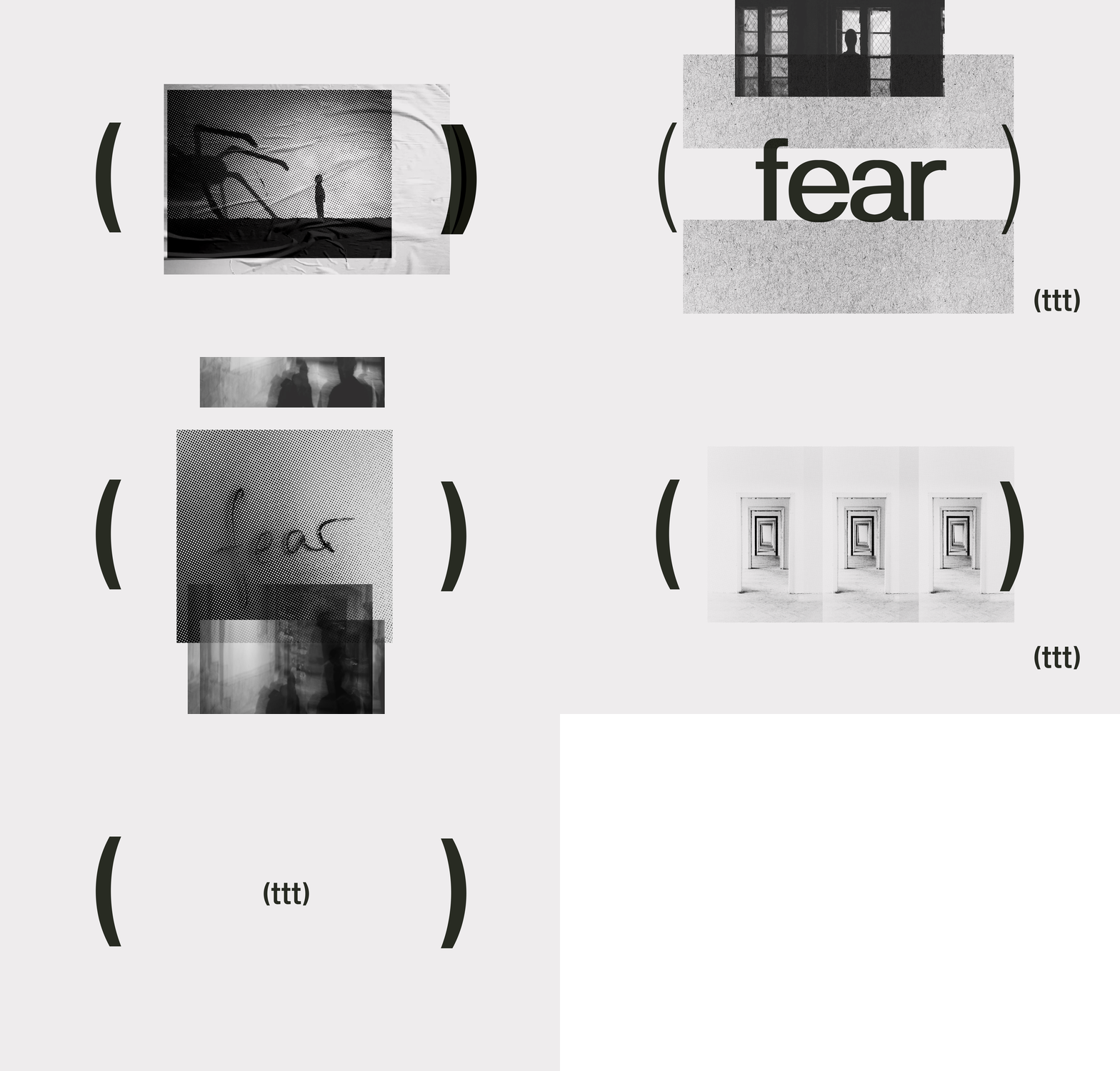
After years of supporting organizations and working on transformation processes, there is a pattern that I observe and is repeated with a regularity that surprises me.
When executives or teams face an important decision (and sometimes not so much), the ease or difficulty of making it may not depend on technical complexity or the amount of information available. It largely depends on how much fear there is in the room. Or how much there isn't.
I have witnessed how sessions that should be for decision-making turn into sessions of continuous analysis and questioning. And how those sessions multiply and elongate: one more to visualize, another to review, another to gain more clarity and sometimes simply to be able to question the data and the information or the credibility of those who provide it, consciously or unconsciously searching to avoid making decisions or moving in a new direction.
It's a very human behavior, not because it is or isn't rational, but because it is emotional.
A primary symptom I observe is that fear shifts attention to concepts like cost, loss, and risk. The opportunity, even when it is clear, loses focus and becomes small. Fear has taken it out of the frame.
You cannot look at fear and opportunity at the same time.
Fear and opportunity compete for the same space of attention. When fear dominates, all the energy of the team is consumed in calculating what might go wrong, what could be lost, what it costs. The time and energy of the team are invested in seeking safety and certainties.
It's like trying to drive only looking in the rearview mirror. You see what you leave behind, but not where you are going.
Daniel Kahneman and Amos Tversky, in their Prospect Theory (for which Kahneman received the Nobel Prize in Economics in 2002), demonstrated that humans feel losses with approximately double the intensity of equivalent gains. In other words, losing something hurts significantly more than gaining the same amount brings joy. It is not a defect. It is human. We are programmed to protect what we are and have.
Benartzi and Thaler, relying on Kahneman's Prospect Theory, described what they called "Myopic Loss Aversion": our tendency to disproportionately focus on short-term risk, losing sight of long-term gain. It is one of the situations that arise when an organization, looking only at the coming months, dismisses a transformation that would provide competitive advantage for years. We see the cost, the effort of today that contrasts with the lack of certainty and do not see the cost of not having done it tomorrow.
When this bias operates without being recognized at a board meeting, the effect is predictable: paralysis or slowness. What is already possessed — a process, a structure, a business model — is overvalued simply because it is known. Even if it doesn't work. Even if it hurts. We prefer a familiar pain to an uncertain change.
— Fear and opportunity compete for the same space of attention. When one dominates, the other disappears. —
The forms fear takes in organizations.
Fear does not present itself in a single form. In my experience, it takes different faces that frequently repeat in the organizations we support.
The fear of letting go of the known.
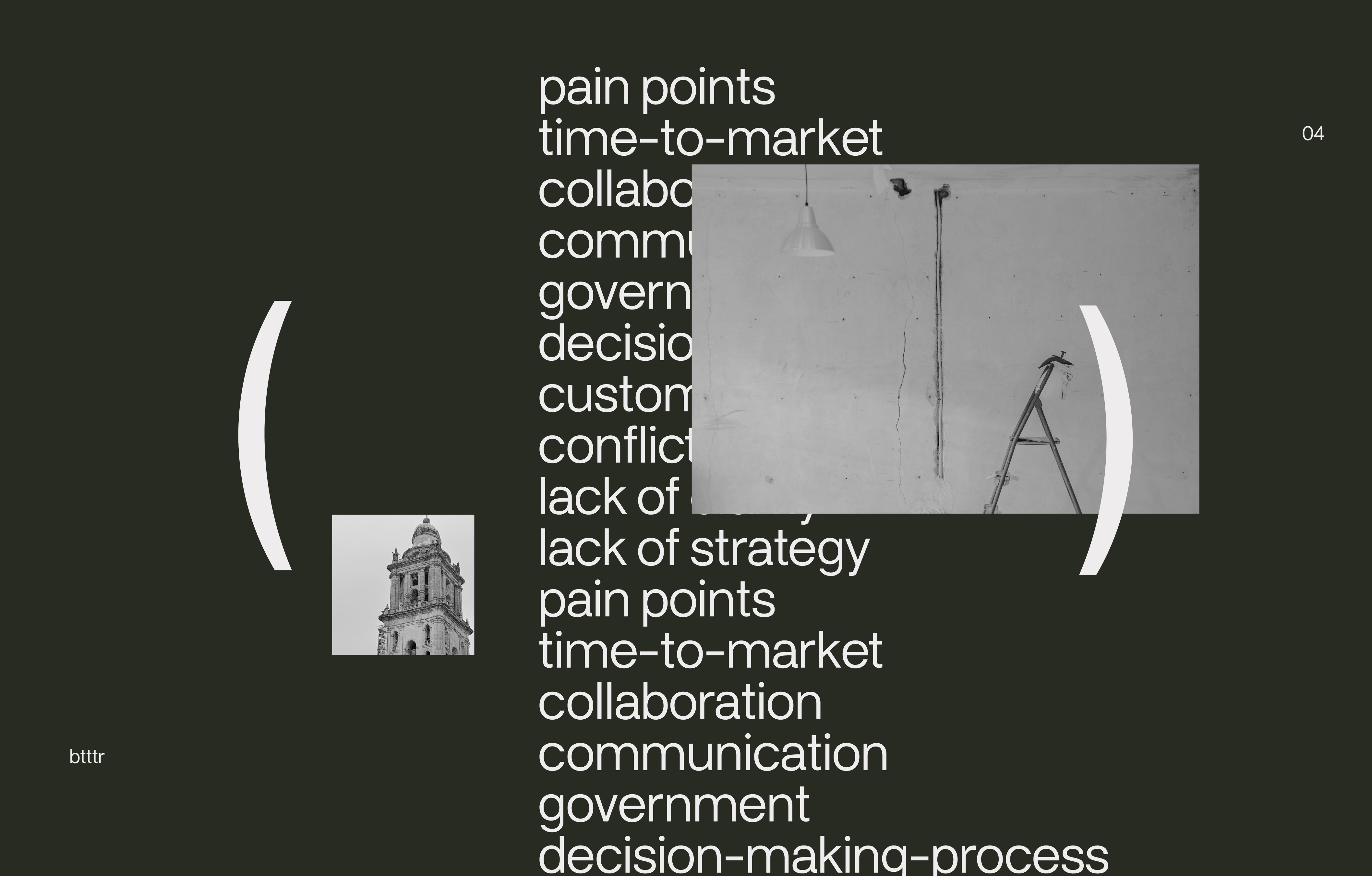
It is the quietest form of fear. It manifests in the preference to maintain processes, structures, or dynamics that clearly do not work, but that are familiar. They prefer to live with friction rather than face the discomfort of the new. It is paradoxical: the fear of stopping is precisely what stops them.
The fear of deciding.
This is perhaps the easiest to recognize because it disguises itself well. It dresses as prudence, rigor, the need for more information. "We need more data." "It is not the time." "Let's do another study." The endless sessions are its most visible symptom: meetings that repeat not because of a lack of information, but because of a lack of willingness to assume the responsibility (and consequences) of a decision.
The fear of exposure.
The leader who does not ask what they do not know. The executive does not recognize that their team is stuck. The person who confuses vulnerability with weakness. When there is no psychological safety in a team, no one dares to put on the table what is really happening. And if no one says it, no one resolves it. Silence becomes a blocker as potent as any technical limitation.
The fear of failing.
There are organizations that have already tried to transform. They invested resources, time, energy. And it didn't work. The ghost of that failure installs itself and blocks any new initiative. "We already tried and it didn't work." Organizations that were quick, without the proper preparation, now find themselves on the bench, injured, while other organizations pass them by.
— Fear does not always shout. Sometimes it disguises itself as prudence, rigor, experience. But the effect is the same: not moving forward. —
Some data
A study by McKinsey & Company revealed that 85% of executives recognize that fear frequently or constantly hinders innovation in their organizations.
The data is compelling. But the next one is even more so: nine out of ten organizations are doing absolutely nothing to mitigate those fears.
In other words, the vast majority of leaders know that fear is there, they recognize it, but do not act on it. They normalize it. They integrate it as part of the organizational landscape.
The consequences are clear: only 11% of companies with cultures where fear predominates manage to be innovative leaders in their industry. In contrast, 58% of companies with low-fear cultures achieve this.
For its part, Accenture found in its survey of financial services executives that 74% considered the fear of change to be one of the biggest obstacles to transformation. Fear not only hinders innovation; it hinders an organization's ability to evolve.
It's not that executives don't know it. They know. But knowing it and acting are two different things. And there, again, fear appears.
— 85% of executives know that fear hinders their organization. 90% do nothing about it. That is true paralysis. —
The cost of not deciding.
There's an idea that I often share with the teams I support: not deciding is also a decision. And it has a cost. Have you calculated it?
While an organization postpones, the competition moves forward. The market changes. The window of opportunity narrows. Clients go with whoever offers them less friction, more speed, better experience. And the gap, which initially was small, grows wider.
Organizations that do not adapt do not always disappear suddenly. They gradually become irrelevant. And when they want to react, the effort needed is exponentially greater.
The most costly fear is the one that is not recognized. Because as long as it remains invisible, it will continue to decide for us.
And so, what do we do?
I don't have a magic formula. But I do have a conviction: the first step is to stop normalizing fear as an inevitable part of management. It isn't. It is a symptom. And like any symptom, it can be addressed.
Research and our own experience point to three practices that can profoundly change the dynamics of any executive team.
1. Name the fear.
It seems simple, but it is the hardest. It is common that when we ask, fear is denied, avoided. They seem to speak from certainty and conclusively. However, their behaviors give them away: procrastinating, asking for more analysis, avoiding uncomfortable conversations. The first step is to bring it out of the invisible. Create spaces where the team can talk about what they fear without consequences. Naming the fear is the beginning of deactivating it.
2. Separate facts from narratives.
Many organizational fears are not based on data but on stories. "The last time we tried something like this, it went wrong." "The market is not ready." "Our team can't handle this." The key question that an executive team should ask itself is: is this fear telling me something real and concrete, or is it an internal narrative or belief that is holding me back? Differentiating between real risk and perceived risk can free up a huge amount of blocked energy.
3. Prototype before scaling.
My favorite, let's test the idea. One of the most effective ways is to reduce the perception of risk through small pilots. Test in a team before implementing it organization-wide. Create prototypes to test products, services, or business ideas. Validate a hypothesis before committing all resources. Often, the most advanced organizations are those that have learned to experiment on a small scale before scaling.
4. Reconnect with the strategy.
When fear dominates, doubt grows and attention dissipates. Teams react and progress becomes more difficult. Returning to the strategy is to regenerate certainty. Focus on what is wanted to be achieved, on the planned path, on the priorities that have already been defined. Measure progress in that direction. Do not want to shoot at everything for fear of not hitting anything. The strategy, when clear, acts as an anchor that reduces uncertainty and returns the team's ability to decide with direction.
These practices do not require large investments or radical transformations. They require something scarcer and more valuable: the willingness to look fear in the face, which we prefer to ignore.
A question that may be useful in your next planning session:
— Have you thought about the role that fear plays in your organization? What is its cost? What are you doing about it? —
Shall we talk? Write to us at hello@bettter.co
Important note: Our writings are the result of our experience and work philosophy, as well as the result of learning experiences in our lives and with our clients. They are experiences, ideas, and provocations. If you find them useful for you, feel free to make them yours.
Photographic illustration: Unsplash, Vadim Bugolov, Olyesia Yemet, Julius Drost