Previous case
Client
Retail
Estimated duration
Many organizations face the challenge of transforming their teams' capabilities. Sometimes, these are highly specialized areas, such as design teams with specific profiles—UX, UI, Research; in others, they are project or product leadership profiles. The latter was the case for our client, who was looking to define a strategy to expand the capabilities of their Product Owner team. The main challenge was to provide this team with a more comprehensive vision of product and business, to facilitate decision-making that better balanced business needs with the organization's actual technological capabilities.
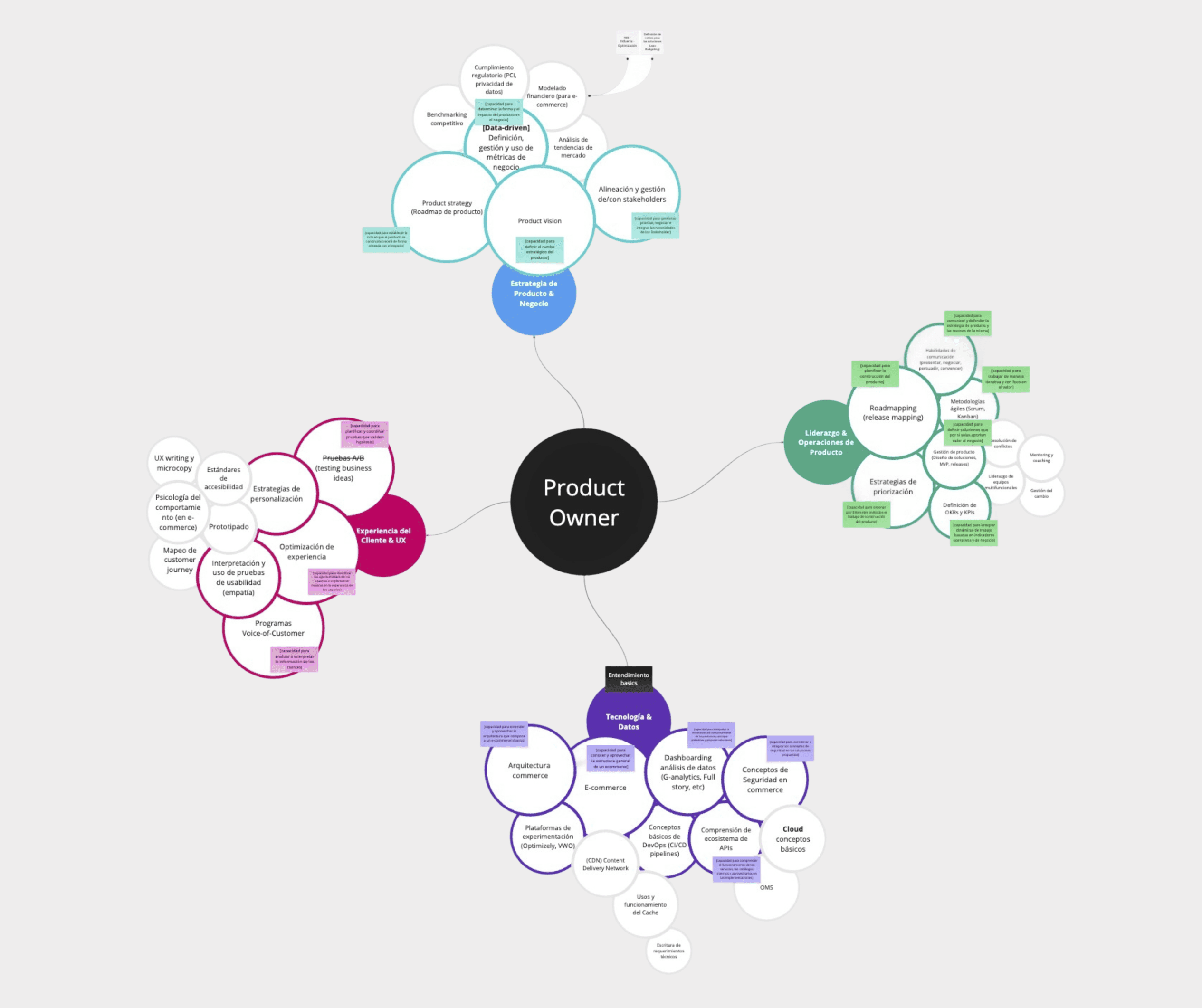
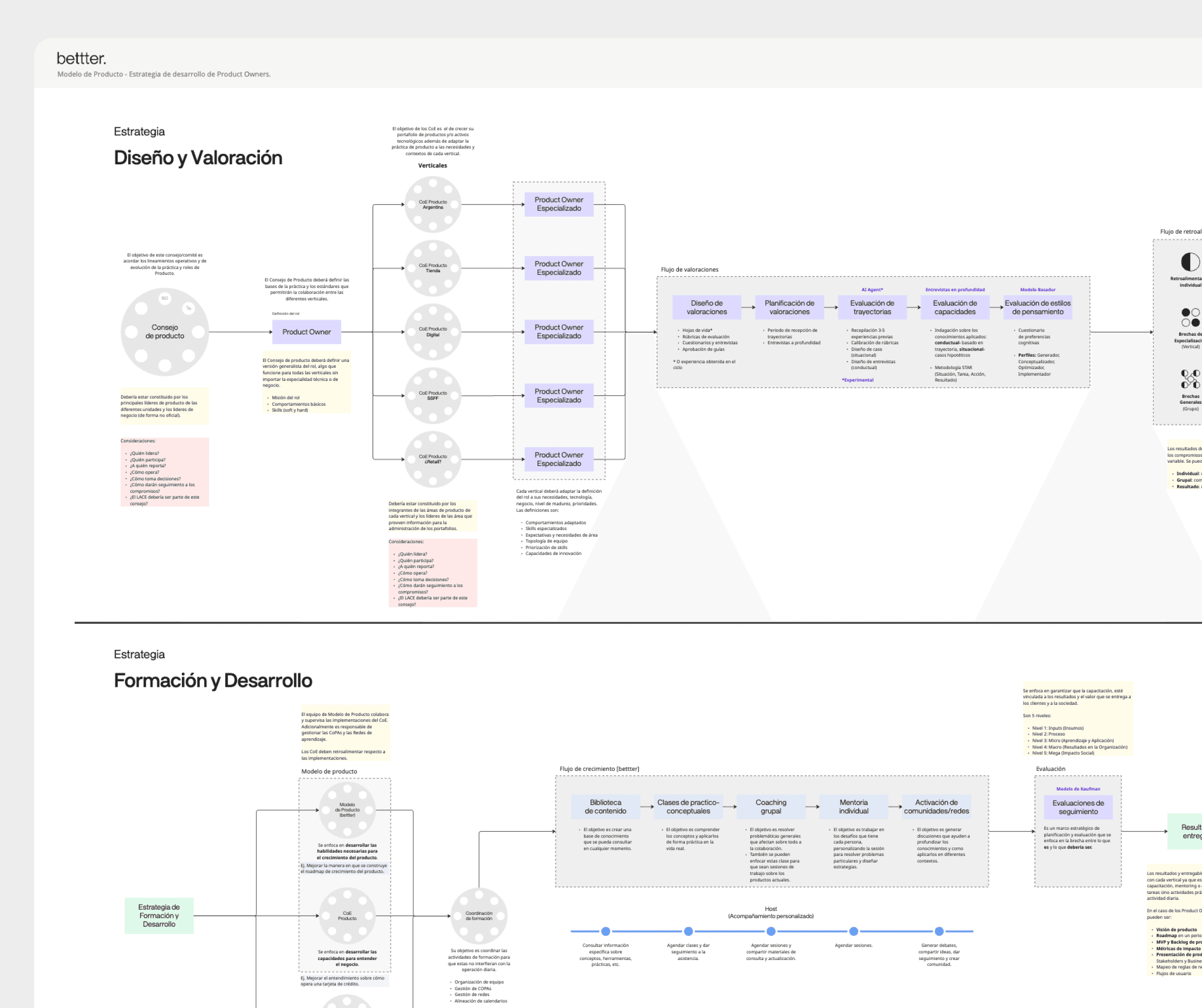
Details of the skills evaluation model
We helped the client work through two key moments. First, the team diagnosis, not only in terms of capabilities, but also in terms of maturity level and seniority with respect to the project's objectives. In a second phase, we planned the content and methods that could help the profiles advance and evolve based on the projects they were leading.
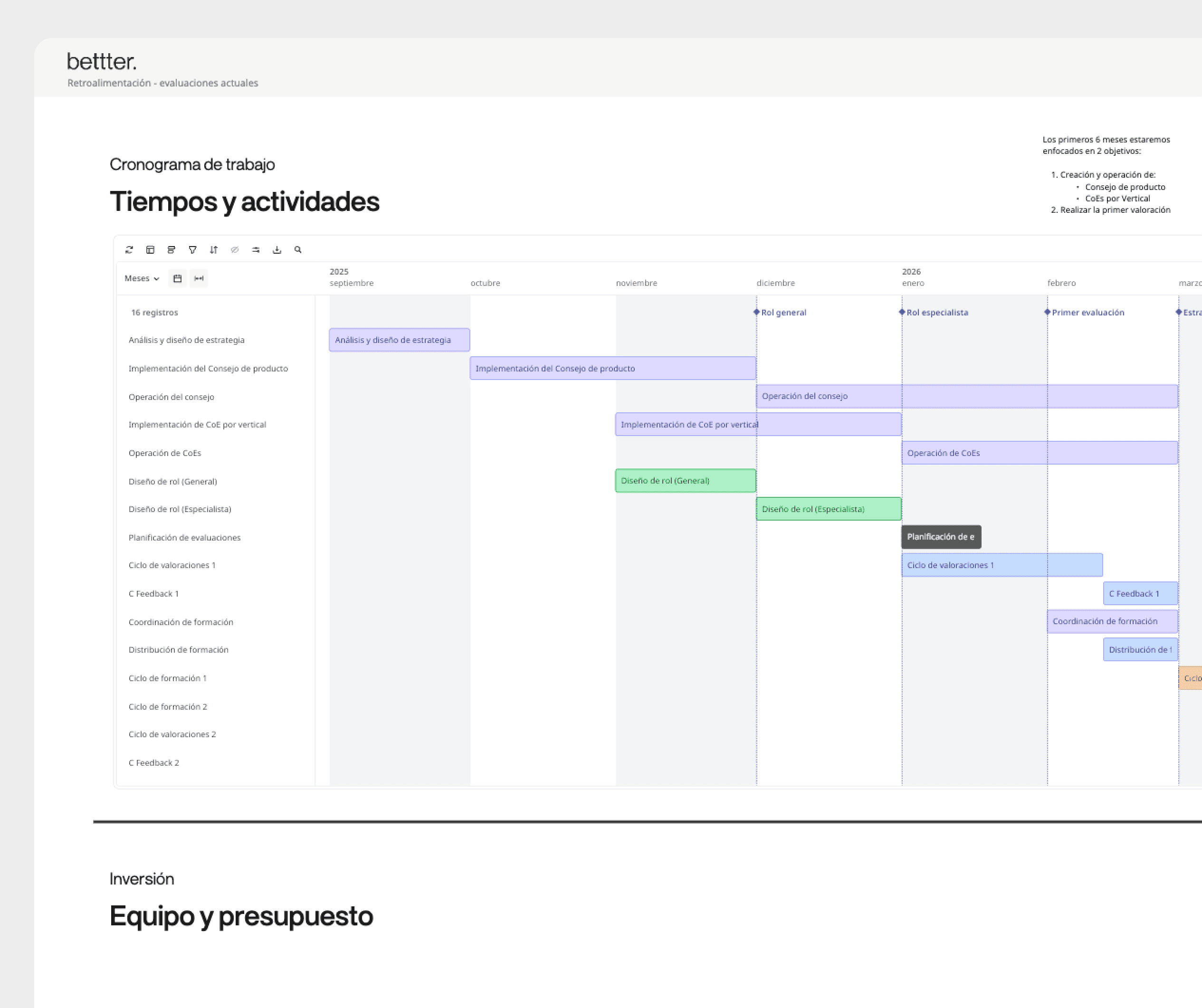
Phase 1
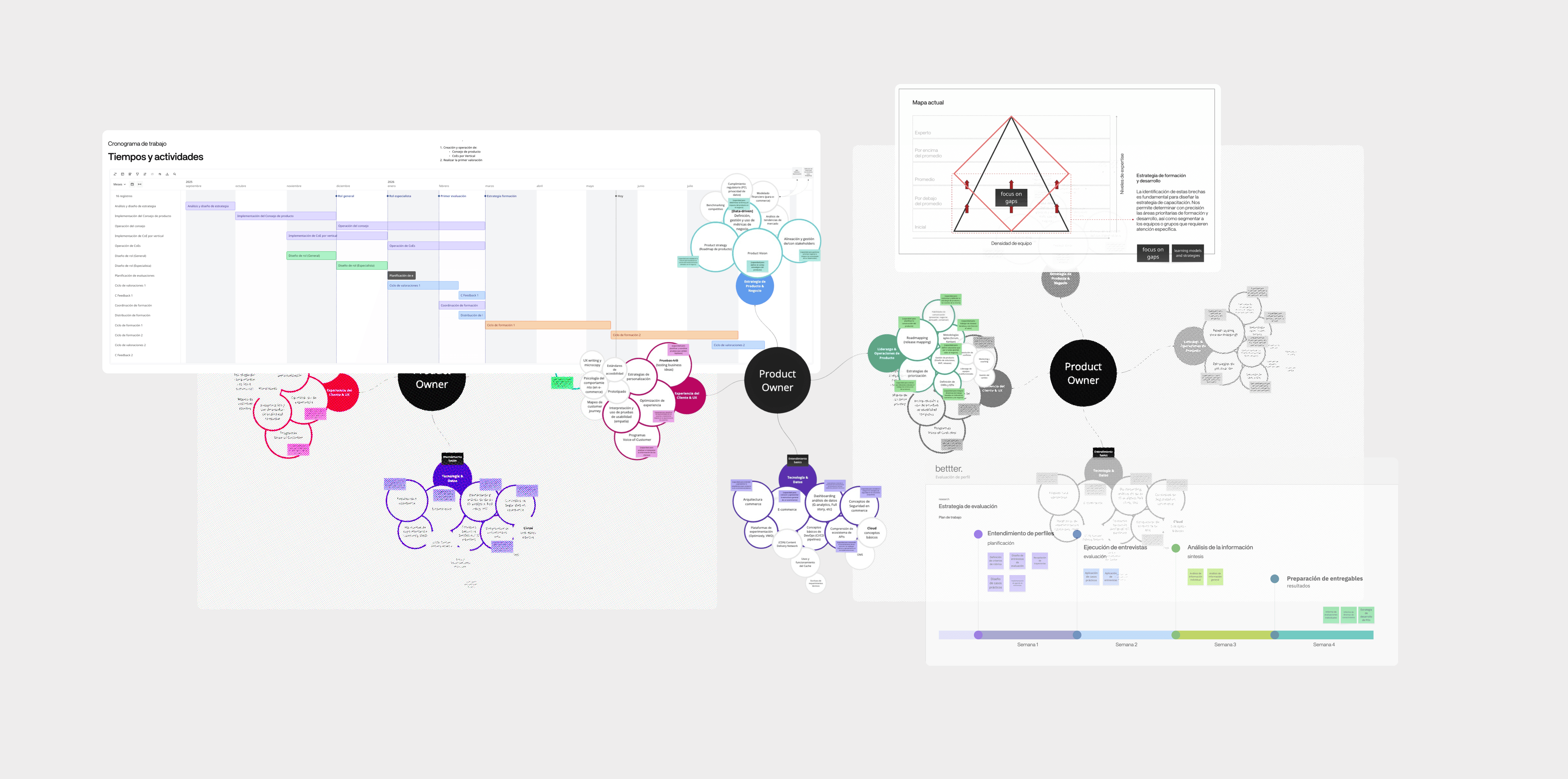
We worked with the client on an expectation alignment model and a diagnostic model that combined 360 evaluations, interviews, and surveys to assess the current state of the team's competencies in relation to business expectations. Based on this, we designed a series of artifacts that visualized the gaps between both points.
Additionally, we conducted a diagnostic of the maturity level of the roles, their seniority, and the organizational structure, with the aim of helping the client identify alternative approaches to solving the problem. These deliverables served to prioritize needs and guide the design of a comprehensive training plan for the team.
Phase 2
In the second stage, we proceeded to design the theoretical model, the content, and the delivery and support model. We defined how development and transition could be made compatible with ongoing work, without requiring time outside of working hours. The premise behind this model —which bettter proposes and recommends— is that the acquired knowledge can be directly applied and practiced within the organization's own projects.